The Back-Room Table Portrait: Clear Faces at a Dim Local
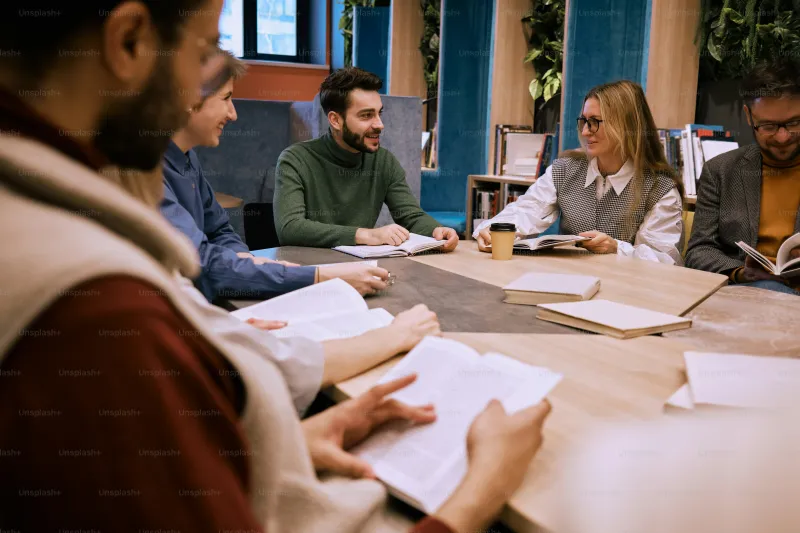
Photo: group of colleagues Christmas party in British pub low light table portrait, via plus.unsplash.com
The works Christmas do has a predictable arc. People arrive early, behave for the first hour, then somebody remembers the team needs a group photo. By that point you are in the back room of a British pub, wedged between a Christmas tree and a table of half-finished pints, with a ceiling the colour of strong tea and about four different light sources fighting each other.
The goal is not a studio portrait. It is a clear, honest record of the people who turned up. Faces should look like faces, the pub should still look like a pub, and nobody should be orange. Here is how to get there without turning the evening into a photoshoot.
Scout the room before the first round
Do the recce while people are still ordering. Ask the landlord where you can stand and whether there is a back room or a quieter corner you can borrow for two minutes. Check the ceiling: a low white ceiling is your friend for bounce flash. Dark beams, red walls or a painted ceiling will bounce colour straight back onto skin, so do not aim a flash at them.
Look for the least chaotic background. A plain wall, a curtain, even a closed door is better than a TV screen showing a football match or a mirror catching a downlight. If you can move one table and two chairs, do it. Keep it quick; nobody wants to feel like they are on a location shoot.
Mixed pub lighting is normal. You will have warm pendants, cool LED strip lights, candles, fairy lights and maybe a window if you are early. Do not try to fix all of it. Pick one direction for people to face, ideally toward the brightest neutral area, and keep the rest as atmosphere.
The two-minute permission routine
Ask the venue before you start. A quick word with the landlord or duty manager avoids the awkward moment when a flash goes off near a quiet table. Then ask the group. Say what you are doing, mention the flash, and offer to send them the picture. Nominate one person to round people up so you are not herding colleagues like sheep.
Keep the posing bit short. A countdown and three frames is usually enough. If someone hates being photographed, put them at the edge and do not make it a thing. The best group photos come from a room that still feels relaxed.
Flash: bounce, off-camera, or none at all
On-camera flash pointed straight at a group is the fastest route to shiny foreheads and hard shadows on the wall behind. If you have a speedlight, aim it at a white ceiling or use a bounce card. That gives softer light and keeps some of the pub background visible. If the ceiling is dark wood or a low coloured surface, do not bounce; you will just paint everyone in the room's paint colour.
An off-camera speedlight in a corner can work well in a back room. Put it high, point it slightly down, and trigger it manually. Keep the power modest so it fills rather than flattens. A bare flash from below is never flattering, so avoid table-level setups.
No flash? Then work with what is there. Move people toward the brightest wall, turn off the phone torch, and brace your camera or phone on a table, chair back or pint glass coaster. A stable phone in normal mode usually beats a wobbly night-mode exposure for a group that is still moving.
Phone night mode has limits
Night mode is brilliant for a quiet street or a Christmas tree. It is not brilliant for twelve people who are breathing, blinking and swaying slightly. The longer exposure brightens the background but smears faces, softens detail and turns fairy lights into glowing blobs. For a group, switch night mode off if you can.
Use the main lens, not digital zoom. Tap to focus on the nearest face, then drag the exposure down a touch so the highlights on glasses and foreheads do not blow. Take three or four frames in a row. If your phone has a burst mode, use it. Check one frame at normal size before you let everyone disperse.
Pose the table, not just the people
Start with height. Taller people at the back, shorter people in front, and stagger heads so nobody is directly behind somebody else's nose. Ask people to turn their shoulders about fifteen degrees toward the main light. That simple turn adds shape to faces and stops everyone looking like a row of passports.
Avoid standing people directly under a downlight. It creates dark eye sockets and shiny patches. If you cannot move the light, move the person. Ask them to hold drinks at chest height rather than in front of their faces, and keep Christmas crackers and coats out of the immediate foreground if you can.
Give clear, friendly instructions: 'Look at the lens, not the screen. Big breath. Three, two, one.' Then take a few frames. A group photo works best when it feels like a quick pause, not a performance.
Edit for honest pub colour
In the edit, resist the urge to make the pub look like a neutral studio. Some warmth is good. Set white balance from something neutral in the frame if you can find it: a white shirt, a napkin, a menu, a piece of cracker paper. If there is nothing neutral, keep the amber but pull back the saturation slightly.
Use local adjustments rather than dragging the global temperature around. Lift shadows gently on faces, but leave the background dark enough to feel like a pub. Reduce orange saturation in skin tones with HSL if needed, rather than cooling the whole image. Do not over-denoise; a little grain is fine and much better than plastic faces.
Keep fairy lights as small highlights. If they are blown, leave them; they are part of the scene. Fix shiny foreheads with a light local brush, not a global blur. Export a sensible size for sharing, around 2048 pixels on the long edge, and send it the next morning when everyone is more likely to appreciate it.
A short checklist
Ask the venue. Find a plain background. Check the ceiling before bouncing. Turn off phone night mode for groups. Stagger heads and turn shoulders. Take three frames. Edit for believable warmth, not perfect neutrality.
Do that and the back-room group shot stops being the photo everyone avoids and becomes the one that actually gets sent round the office.