Lit Windows, Steady Hands: Photographing a Village Advent Trail After Dark
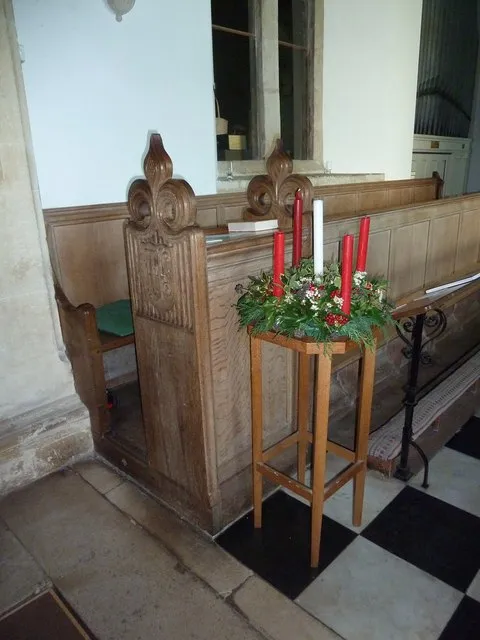
Photo: Basher Eyre , CC BY-SA 2.0, via Wikimedia Commons
A village Advent trail is one of those quiet British traditions that looks simple until you try to photograph it. For a few evenings in December, ordinary front rooms, church porches and shop windows become a numbered route of handmade scenes: paper stars, knitted sheep, a shaky cardboard stable, maybe a kettle and a tin of biscuits for anyone who stops. The job is not to turn it into a soft-focus Christmas advert. It is to make a clear, useful record that the organisers, the makers and the next year’s trail can actually look back on.
That means planning for darkness, mixed light and other people’s homes. It also means resisting the urge to over-edit every window into a glowing orange blob. Here is a practical way in.
Walk the route before you shoot it
If you can, visit in daylight first. You are not looking for beauty so much as logistics: where the pavement narrows, which windows face a streetlamp, where a parked car blocks the view, and which displays are best seen from across the road. Make a note of the window numbers. Trail organisers often publish a map, but the real route is the one you can stand on safely without tripping over a wheelie bin.
Think about sequence. Starting at dusk gives you a little blue in the sky and enough ambient light to show the shape of a street. Starting later gives you stronger window contrast but a blacker frame. A good compromise is to shoot the first few windows in late twilight, then carry on as the village goes properly dark. If the trail runs for several evenings, ask the organisers which night is quietest. You will get cleaner frames and fewer apologies.
Keep the kit small and the manners large
This is not a job for a giant tripod and a flash gun. A phone with a decent main camera, or a mirrorless body with a fast prime lens, is plenty. A small tripod or clamp can help, but a wall, a gatepost or a folded coat on a low wall will often do. Bring a small torch for reading the map, not for shining into windows. A microfibre cloth is essential; December air loves to fog a lens.
Courtesy matters more than gear. These are people’s homes. Do not press a lens against glass, block a driveway, or stand in a front garden without an invitation. If a resident is outside, say what you are doing and ask if they mind. Avoid photographing children or anyone who has not agreed to be in the frame. A window display is fair game as part of a public trail; the family watching telly behind it is not. If you want a close detail of handmade work, ask first. Nine times out of ten, the maker will be delighted and will tell you exactly which bit took the longest.
Phone settings for fairy lights and front rooms
Phones want to make night scenes brighter than they are. That is usually the opposite of what you need. Tap on the brightest part of the window display, then drag the exposure slider down until the fairy lights keep their colour instead of turning white. Use the main lens, not a digital zoom. If you must get closer, walk closer — or crop later within reason.
Night mode can be useful, but watch it. A one-second handheld exposure can work if you brace your elbows on a wall; a three-second exposure will smear the tinsel and turn passers-by into ghosts. Turn night mode off if the display has moving parts or if you are shooting through glass with reflections. Use the timer or a volume-button shutter to avoid jabby finger movement. Take three frames: one at the metered exposure, one darker, one slightly brighter. The darker frame often saves the lights.
Camera settings for mixed light
For a camera, start around f/2.8 to f/4, ISO 800 to 3200, and a shutter speed of 1/30 to 1/60sec if you are handholding. That is a starting point, not a rule. Raise the ISO before you risk camera shake. If you have a tripod, stop down a little and use a two-second timer. Shoot raw if you can; mixed fairy lights, streetlamps and domestic bulbs are much easier to tame later.
Do not chase a perfect white balance on site. The scene is mixed. A neutral-ish daylight or auto setting is fine, and you can refine it in the edit. What matters is protecting the highlights. A string of warm bulbs that has gone pure white has lost its colour, and no slider will bring it back convincingly. Expose for the lights, then lift the shadows gently.
An honest edit that keeps the details readable
Start by setting a sensible neutral balance — not icy blue, not pumpkin orange. Pull down highlights to recover the bulbs, then lift shadows just enough to show the cardboard, yarn and painted letters. Resist the global clarity slider; it makes fairy lights look crunchy. Instead, use a little texture on the display itself and leave the surrounding street alone.
If the oranges are overwhelming, reduce orange saturation slightly rather than throwing the whole image cold. If noise is obvious, use mild denoising, but check the handmade details afterwards. Over-denoising turns knitted figures into felt blobs. A small amount of grain is more honest than a waxy window. Straighten the verticals if you can; village halls and front doors rarely stay level after a hand-held night shot. Crop out the worst of the wheelie bins, but do not crop so tight that the display loses its setting. The street is part of the story.
Finally, deliver the images where they will do some good. Send a few low-resolution previews to the trail organiser, offer captions with window numbers, and ask before posting close-up details of someone’s home. A clear record of a local tradition should feel like a thank-you note, not a content harvest. Keep it warm, keep it sharp, and let the handmade bits look handmade.