Lights On, Hype Off: Honest Shopfront Photos at Blue Hour
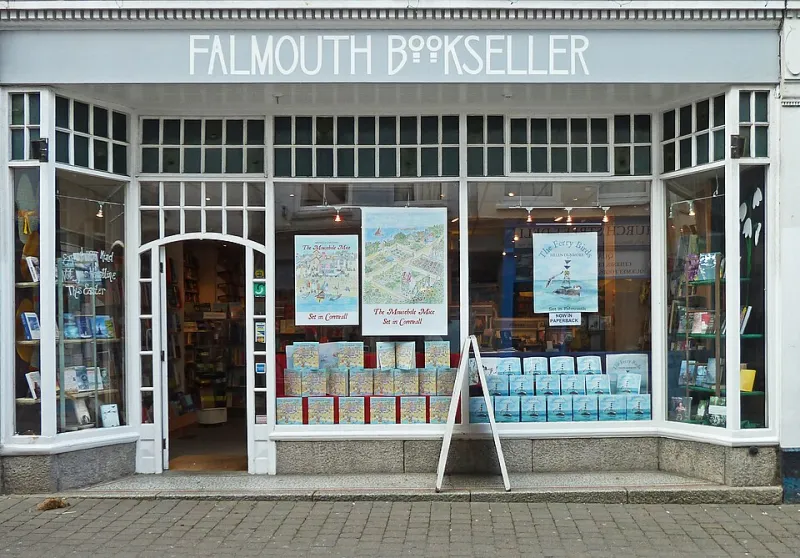
Photo: Tim Green from Bradford, UK, CC BY 2.0, via Wikimedia Commons
The clocks have changed, the pavements are damp by half four, and every independent shop on the high street is trying to look welcoming without looking like a fairground. This is the awkward season for shopfront photography. The sky still has a bit of blue in it, the windows are glowing, the streetlights are coming on, and your phone wants to turn the whole thing into a glowing orange postcard.
That is fine for a Christmas card. It is not fine for a Google Business Profile, a social post or a local directory listing. Those need to show what the shop actually looks like, what the sign says and what is inside the window. The good news is that you do not need a full-frame camera or a lighting kit. You need twenty minutes, a sensible position and a light touch in editing.
Arrive before the streetlight wins
Blue hour is not really an hour in November. In most UK towns it is a short handover between daylight and proper dark, often somewhere around 4pm to 4:45pm depending on where you are and how much cloud is about. Arrive early. Scout the frontage in daylight if you can, then come back when the interior lights are on but the sky has not gone black.
For a phone, turn off the flash. It will bounce straight back off the glass and make the window look like a frozen puddle. Leave auto HDR on if your phone insists, but do not go hunting for night mode too early. Night mode is useful when the street is properly dark; at blue hour it often smooths the life out of the scene and turns fairy lights into soft blobs.
With a basic camera, use RAW if you have it. A modest aperture around f/5.6 to f/8 keeps the sign and the window reasonably sharp. Raise the ISO before you resort to a slow shutter speed, and use a wall, a railing or a small tripod if you have one. A steady frame matters more than a fancy one.
Stand square, then step sideways
The biggest problem with shopfront photos is reflection. You want the sign legible and the window clear, but glass is a mirror with a good publicity team. If you stand dead centre, you may get a perfect reflection of the bus stop, the bin lorry or the bright shop across the road.
Start square on to the frontage so the verticals are straight and the sign reads properly. Then move a step or two left and right. Watch what appears in the glass. Sometimes a dark building opposite is your friend. Sometimes a slight angle is enough to push the worst reflection out of frame. If you are using a camera with a circular polariser, try it, but do not overdo it: too much polarising can kill the warm glow from inside the shop.
Condensation is another winter classic. If the window is misted on the inside, you cannot edit that away convincingly. Shoot earlier before the heating has been on for hours, or ask politely whether the window can be wiped on the outside. Never lean on the glass or rearrange a display without permission. If the door is open and the shop is happy for you to shoot from the threshold, that can be cleaner than fighting the reflection.
Balance the warm inside with the cool outside
A shopfront at this time of day has two light sources: the warm interior and the cooler street. You want both to feel natural. The mistake is to let the phone or the editing software decide that the scene is either purely orange or purely blue.
On a phone, tap the brightest part of the sign or the window display and drag the exposure down slightly. You want the sign readable and the window details visible, not a white rectangle where the sign used to be. On a camera, expose for the highlights and bring the shadows up later. Do not worry if the sky looks a little darker on the back screen. Blue hour is supposed to look like blue hour.
White balance is where honesty lives. Auto white balance is usually fine, but if the shot looks too yellow, nudge it cooler in editing rather than in camera. If you are setting it manually, somewhere around 4000K to 4500K is a reasonable starting point for a mixed street scene. UK streetlights are not all sodium orange any more, so do not assume the whole pavement should be amber. Keep the interior warm, keep the sky cool and let the street look like the street.
The edit stops when the sign is legible
The aim is not a dramatic HDR showpiece. The aim is a photo that a customer can use to recognise the shop. In editing, bring the highlights down if the window is blazing. Lift the shadows a little so the pavement and doorframe do not turn into black soup. Straighten the verticals, crop out the distracting wheelie bin and stop there.
Avoid heavy clarity, texture and saturation. A little contrast is fine. A little vibrance is fine. If the sign is readable, the window has some detail and the colours look like the shop you stood in front of, you are done. For Google Business Profile and local listings, export a clean, sharp image at a sensible size rather than a heavily filtered square. For social, crop to the shape you need, but do not crop the sign in half to make the window look bigger.
Wet pavements, fairy lights and the orange HDR trap
Wet pavements are a gift if you use them gently. They add reflection and a bit of atmosphere. Shoot from a slightly lower angle if you want the lights to stretch across the pavement, but keep the shopfront upright. Do not let the reflection become more important than the shop.
Christmas displays are the other seasonal hazard. Fairy lights inside the window can blow out into white streaks, especially on a phone. Tap the brightest light, pull the exposure down and let the rest of the window sit a little darker. If the display is very bright, take one frame for the sign and one for the window, then choose the better single frame rather than blending everything into a glowing orange mess. Honest shopfront photos do not need to show every bulb.
A quick checklist before you walk away
- Is the sign readable without zooming?
- Are the verticals straight?
- Is there a giant reflection of you, a bus or a bright shop across the road?
- Is the window condensation-free enough to show what is inside?
- Does the pavement look wet rather than radioactive?
- Have you asked before photographing staff or customers?
- Have you taken one square-on frame and one slight angle as a backup?
- Have you stopped editing while the colours still look like the actual shop?
The blue-hour window is short, but it is long enough. Get there before the streetlights take over, stand with the glass in mind and edit for legibility rather than drama. Your shopfront does not need to look like a film set. It needs to look like the place someone will walk into on a wet Tuesday in November.